
The Alternative Transportation Services Implementation Study study builds on recent work completed from the Mountain Metro Transit (MMT) 2050 Regional Transit and Specialized Transit Plans to provide additional guidance for on-demand transit opportunities to enhance and grow service coverage.
Project Background
What is On-Demand Transit?
On-demand transit is a flexible public transportation option that typically uses smaller vehicles, such as vans or shuttles, to complement traditional bus service. Instead of operating on fixed routes and schedules, on-demand transit responds to rider requests and adjusts in real time, with pickups occurring at or near a rider’s location.
On-demand transit is often used to connect people to bus stops, transit centers, jobs, schools, and other everyday destinations. It can be especially helpful for improving first- and last-mile connections and serving areas where fixed-route service may be difficult to provide.
In recent years, on-demand transit has been growing in Colorado, with services operating in communities such as Denver, Lone Tree, and Durango. These examples reflect a broader interest across the state in using flexible transit options to better meet local transportation needs.
On-Demand Transit in Colorado Springs
On-demand transit can expand access by serving neighborhoods where traditional fixed-route service is unavailable, impractical, or unable to keep pace with rapid development. It strengthens the overall transit system by connecting more people to the network and making transit easier to use, with features like real-time trip booking, vehicle tracking, and seamless connections to bus routes.
On-demand transit also offers an opportunity to better match transit service to how people actually travel. Some bus routes or parts of routes may be better served with on-demand service, which can provide a more flexible and convenient experience for riders. Using on-demand in these areas can help maintain access and make better use of transit resources while continuing to meet community needs.
Existing Conditions
An existing conditions analysis was done in Fall 2025 to assess how Mountain Metro Transit services are working today across Colorado Springs. It reviews current bus and paratransit service as well as where people live, work, and travel. The goal is to understand what’s working well, where service is limited, and where there may be gaps in access to transit.
This information helps identify areas where on-demand transit options could be helpful. By starting with a clear picture of existing conditions, the study can better evaluate where flexible services might improve access, better match service to community needs, and support a more efficient transit system.
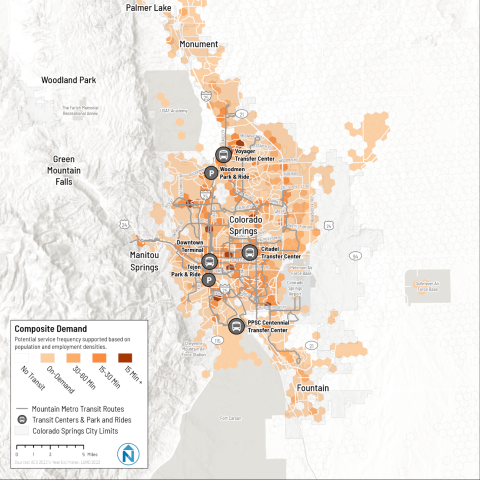
A key component of the existing conditions analysis was assessing the demand for transit service in Colorado Springs. Composite demand, shown here in the map, combines information about where people live and work to indicate areas with the greatest overall need for transit. The map helps identify locations where demand for transit demand exists, which can inform where on-demand options could be most helpful.
The composite demand map (to the right on this page) combines transit-weighted population density and employment density to illustrate where overall transit demand is strongest across the region. Areas with higher composite scores indicate locations where both residents and jobs are concentrated—signaling corridors most supportive of fixed-route service—while lower-scoring areas may be better suited to flexible, on-demand mobility options. Click the image to view a full resolution version of this map.
Public & Stakeholder Engagement
Mountain Metro Transit is conducting an On-Demand Transit Feasibility Study[SL1] survey to understand where and how this type of service could be integrated into the transit network.
Project Reports & Materials
This section will be populated as project materials become available.