Downtown Historic Parks Improvements
CompleteOverview
The master plans for Acacia, Antlers and Alamo Square parks were approved by the Parks, Recreation and Cultural Services Advisory Board on June 11, 2020.
The implementation of the Downtown Historic Parks Master Plan is now complete.
Final Master Plans:
In response to the many social media posts and emails regarding the Acacia Park bandshell:
Thank you for your participation and input on the Acacia Park bandshell. The final master plan does not recommend tearing down the bandshell, but does recommend a feasibility study for how we can reuse and reactivate it along with a structural analysis of the original and mid-century addition. We are recommending this include a public process, when there is funding to proceed. Thank you for caring so much about our parks, their character, and our local heritage.
About the Project
Parks for the people, by the people
The final master plans provide General William Palmer’s 1871 vision for an interconnected park system for Colorado Springs endeavored to become, “the most attractive place in the West for homes—a place for schools, colleges, literature, science, first-class newspapers and everything the above imply.” The three parks in this study – Acacia, Antlers and Alamo Square parks – were some of the earliest efforts to implement Palmer’s vision to improve the quality of life for residents of Colorado Springs.
Improving the quality of life through downtown parks.
This 1-year planning effort seeks to provide efficient, fun and inclusive ways to participate in re-envisioning how these three historic parks continue to provide a safe place for respite and activities for all. Approaching our Sesquicentennial Anniversary, 150 years from the city’s founding, we are taking a moment to ensure future improvements to downtown recreation balance the value of history with a fresh forward-look to determine the best combination of new or renewed park uses, site amenities, programs, infrastructure and management practices. It is also an opportunity to underscore the importance of economic vitality and preserving business relationships to support future park improvements. The master plans provide a road map to renew these parks as part of the existing Park System network with safe, inviting, accessible and activated Downtown Parks.
Email questions and comments to DowntownHistoricParks@ColoradoSprings.gov
Process Overview and Documents
Previous Meetings
PRCS Advisory Board at the June 11th, 2020
Digital Open House April/May 2020
January 28, 2020
The Downtown Historic Parks Master Plan first public meeting was on Tuesday, January 28th from 6-8 pm at the Historic City Auditorium. Below is the presentation and Presentation Boards which reflect two different concepts for each park; and from which the public identified preferred amenities for each park.
Survey #2
Project Documents
Process
- June - August: Project Launch
- Information gathering and project understanding:
- 14 Member Master Plan Committee Kickoff
- 47 participants in Focus Groups Meetings/100+ invitations
- One-on-one interviews
- Booth at the Homelessness Expo
- Information gathering and project understanding:
- September- October: Project Discovery
- Imagine Programming Possibilities:
- Online Survey September 11th-30th
- September 13 Evening Input Booth: Acacia Park
- September 14 What If Festival (10-4pm): All 3 Parks Ideas Collection
- September 18 Mid-day Input Booth: Acacia Park
- September 24 Mid-day Input Booth: Alamo Square Park
- September 26 Mid-day Input Booth: Antlers Park
- September 27 ARTINI
- And other briefings at downtown events
- Imagine Programming Possibilities:
- October 2019 – January 2020: Project Focus
- Evaluating Alternatives:
- Public Meetings and Online Survey
- Future events will be announced and posted on the webpage.
- Evaluating Alternatives:
- February – May 2020: Planning Finale
- Draft and Final Master Plan Public Review, Comment and Approval process
- Future events will be announced and posted on the webpage.
- Draft and Final Master Plan Public Review, Comment and Approval process
Downtown Colorado Springs deserves a network of vibrant historic urban parks!
The Springs is ranked most desirable place to live by US News and World Report, is adding over 7,000 jobs a year and tourism is growing. Downtown residency is increasing; the 2016 Experience Downtown Master Plan targets 2,000 new-build residential units by 2025. Framed by these trends, the Colorado Springs Downtown Historic Parks Master Plan project will consider the future for three legacy downtown public spaces that have been providing the community with recreation and enjoyment for over 100 years:
- Acacia Park (part of 1871 original town plat)
- Antlers Park (gifted by the Colorado Springs Company in 1882)
- Alamo Park (gifted by the Colorado Springs Company in 1899)
In the context of a changing Downtown Colorado Springs (thousands of more jobs and residents) it is important to convene a community conversation on how these three parks are currently being used, what is valued, what needs to be preserved, and how the parks can be renewed to meet the changing needs of the city.
Existing Parks
Maps of the existing parks are available here for reference
Comparable Parks Study
Benchmarking is a practice to establish points of reference against which the Colorado Springs Historic Downtown Parks may be compared or assessed. Click here for a report on parks with relevance to the three historic downtown parks as an inspiration for renewal.
Benchmark Parks Include:
- Rosa Parks Circle (Grand Rapids, MI)
- Republic Square (Austin, TX)
- Historic Market Square Park (Houston, TX)
- Campus Martius (Detroit, MI)
- Hemming Park (Jacksonville, FL)
Recent City Plans
A summary description of all relevance of past plans and reports to the three historic parks is available here:
PlanCOS (Jan 2019)
The recently adopted PlanCOS Comprehensive Plan provides one source of key indicators for the impact of growth on downtown parks. This document gives not only statistical information but also sets large visionary goals based upon where impact and change is recognized and anticipated. For more information, visit: PlanCOS
“PlanCOS will enable Colorado Springs to take advantage of economic opportunities that can create and maintain the very best places to live and conduct business, while also providing excellent quality of life. Essentially, it positions the city to remain a great place for future generations of Colorado Springs residents to live, work and play.” Mayor John Suthers (City page: https://coloradosprings.gov/city-council/article/news/city-council-adopts-plancos-citys-first)Experience Downtown Plan (Nov 2016)
This 2016 Experience Downtown Plan strives to outline a strategic, actionable, consensus-built roadmap to elevate Downtown to the next level.
“The long-envisioned renaissance of Downtown Colorado Springs has taken hold in recent years, as new market interest and development have bolstered the city center in myriad ways. Tejon Street hums as a retail and dining destination. The Legacy Loop and other biking and walking connections are becoming a reality. Several major projects – including the U.S. Olympic Museum in Southwest Downtown, new business investment, and hundreds of new residential units in the pipeline – are poised to further accelerate growth and change in the coming years. …We are no longer “imagining” a great downtown – we are creating it and experiencing it daily.” (Executive Summary, Overview page 3)Park System Master Plan (2014)
The Park System Master Plan proposes a (10 year) vision and strategies to enhance the landscape and valued recreation features that draw people to Colorado Springs, ensuring future generations enjoy the legacy of public parks and open space. When reviewing the Plan Summary, you will find a lot of information to include the Top 10 Issues for the Master Plan to Address, Opportunities for Future Improvements, and Section 4 (page 107) the vision and recommendations for the Park System.
- June - August: Project Launch
Austin Bluffs Open Space Master Plan
About the Project

The City of Colorado Springs Parks, Recreation and Cultural Services is pleased to present the approved and adopted Austin Bluffs Open Space Master and Management Plan. The master and management plan were formally adopted by the Parks, Recreation and Cultural Services Advisory Board on June 11, 2020. The master and management plan is a guiding document for the next 10-15 years for the sustainable development of recreational opportunities in the open space as well as guidance for appropriate management of the natural and cultural resources. Implementation is dependent upon funding.
- Approved Austin Bluffs Master and Management Plan (PDF)
- Approved Austin Bluffs Master and Management Plan Appendices (PDF)
Trailhead Improvements
As a recommendation of the Master and Management Plan, formalization of the Austin Bluffs Open Space south trailhead is underway. This project includes the first phase of the parking lot improvements to accommodate a gravel parking lot for approximately 55 vehicles, a new kiosk, signage and formal access to the open space which will improve the parking efficiency, user experience and safety.
The final trailhead will include a paved parking lot with a total of 100 parking stalls, trailhead plaza and drainage improvements. Final implementation is subject to available funding.
The current lot will temporarily close during construction. Weather dependent, the parking lot will be opened to the public by the end of February with the remaining work wrapping up at the trailhead by April.
Please note that a portion of the Austin Bluffs Regional Trail will be closed during this project due to construction activity. The North Austin Bluffs Open Space/North Pulpit Rock Trailhead located at 6411 N. Nevada Ave. will remain open and available to the public during this time.
2B: Plans for park improvements thanks to voter-approved funding
The Parks, Recreation and Cultural services Department has implemented voter-approved park improvements citywide thanks to voter approval of ballot issue 2B in the November 2019 election which allowed the City to keep $7 million in excess TABOR revenue.
Planned Projects
Browse below for a breakdown of completed and in progress projects. These projects received funding from TABOR retention while also utilizing additional funding from other sources.
Downtown Historic Parks: Acacia, Antlers and Alamo Square
About the parks: Thanks to city founder General William J. Palmer, there has been a vision for an interconnected park system for Colorado Springs since 1871. He wanted the city to become, “the most attractive place in the West for homes—a place for schools, colleges, literature, science, first-class newspapers and everything the above imply.”
Acacia, Antlers, and Alamo Square parks are some of Palmer’s earliest efforts to improve the quality of life for residents.
Master plans for each of the three parks were approved by the Parks, Recreation & Cultural Services Advisory Board in 2020.
Planned improvements:
- Dog park in Antlers Park
Completed improvements:
- Gazebo restoration in Alamo Square Park
- New playground in Acacia Park
- Sign replacement for the Colorado Springs Pioneers Museum in Alamo Square Park
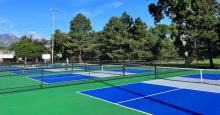
Monument Valley Park
About the park: This community park primarily serves the central and west areas, but is a destination site for events, commuters and sports activities
Completed improvements:
- Historic pavillion restoration
- 18 trees planted, including maple, Dakota birch, linden, bald cypress and pin oak.
- Sports lighting for pickleball courts
- Irrigation replaced with updated system
Palmer Park
About the park: Located near north, central and eastern residents, Palmer Park serves the City as a regional park. One of the most frequent requests we hear from our residents and visitors is to improve trail signage to minimize confusion when navigating the park.
Completed improvements:
- Wayfinding signage installed, which aims to make the centrally-located park easier to navigate.
Cottonwood Creek Park

About the park: This community park is located at the corner of Dublin Blvd. and Rangewood Drive on the north side of the city.
Completed improvements:
Artificial turf installed on the three softball fields at Cottonwood Creek Park; this is a cost and water-saving measure that will allow the lighted sports complex to be used for other sports, like soccer, without risk of compromising the field condition. It’s estimated that the conversion will save 2.8 million gallons of water annually. The sod from the fields was removed and replanted near the playground in Palmer Park.
Leon Young Sports Complex
About the park: Located near Fountain Blvd and Chelton Road on the city’s southeast side.
Completed Improvements:
Parking lot repairs providing a safer space for residents and visitors
Boulder and Thorndale Parks
About the park: These two neighborhood parks serve the Central and West areas of our city
Completed improvements:
- Sport court replacement including the construction of four tennis/pickleball courts. Boulder and Thorndale Parks were selected for court replacement based on community support and continued interest in these two neighborhood parks.
Panorama Park
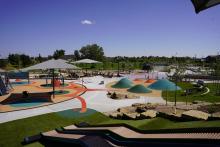
Panorama Park, the 13.5 acre neighborhood park located in Southeast Colorado Springs, adjacent to Panorama Middle School is now open! The renovation of Panorama Park was the largest in City history and was a highly collaborative community process. TABOR retention funds were applied to the new water feature and play area. Learn more about this renovation by visiting ColoradoSprings.gov/PanoramaParkRenovation.
Homestead, Mesa, Legacy Loop and Sand Creek trails improvements
About the trails: These trails are located in the north, west and east/south areas of the city. The project also continues the efforts to connect the Legacy Loop.

Completed improvements:
Existing asphalt was removed and replaced with concrete from Columbia to Uintah streets along the Shooks Run Trail corridor, a section of Legacy Loop. The new concrete trail is 10-feet wide with a 2-foot gravel running path on one side of the trail. The project also includes four new, ADA-compliant pedestrian ramps.
Two deteriorating asphalt segments of the Palmer-Mesa Trail were replaced with concrete. The section located parallel to 30th Street was approximately 1,300-feet long, and the section along Mesa Avenue was 155-feet long.
Part of the Sand Creek Trail, from the northernmost section of Wildflower Park to Nordic Drive, was improved by removing deteriorating asphalt and replacing it with concrete.
A stretch of failing asphalt on the Homestead Trail, from Barnes Road to Coneflower Lane was replaced with concrete.
Fairview and Evergreen Cemeteries
About the locations: Fairview and Evergreen cemeteries are the oldest, continuously operated cemeteries in the city. In 1993, Evergreen was placed on the National Register of Historic Places, only the second cemetery in the state to receive this designation. Located in the south and western areas of the city, the cemeteries serve the entire community.
Completed improvements:
- Repaved parking lots to allow for a safer and improved experience for visitors. 2C paving funds were also used.
Norman Bulldog Coleman Community Park Master Plan
About the park: Coleman Park currently houses the Switchbacks and Vibes sports teams and allows for sporting activities and events.
Planned Improvements: This funding will give the community the opportunity to help plan this 70-acre community park in the eastern part of the city off Tutt Boulevard and Barnes Road. The master plan effort is underway with outreach opportunities starting in approximately May 2022. Visit ColoradoSprings.gov/colemanpark for details.
Open space Wayfinding and Signage Project
Overview
In 2020, the Parks, Recreation and Cultural Services Department adopted a comprehensive wayfinding design package for open spaces acquired under the Trails, Open Space and Parks (TOPS) program. Through public and stakeholder feedback, the department developed a design that would create a consistent signage and wayfinding system across the TOPS Open Space properties. This package included fonts, styles, elements, colors, materials, signage placement, signage hierarchy and signage maintenance standards and requirements that is currently being implemented throughout multiple TOPS Open Spaces.
Project Goals
- Enhance the natural aesthetics of the property
- Improve navigation for all modes of non-motorized recreational travel within the open space; improve the user experience and emergency services efficiencies
- Reinforce the identity of the TOPS program
- To be sustainable, maintainable and expandable to all TOPS Open Space properties as well as to establish an ongoing administration and maintenance plan for the wayfinding system
Completed Signage
- Bluestem Prairie Open Space
- High Chaparral Open Space
- Rock Island Open Space
- Stratton Open Space
- Cresta Open Space
- Blodgett Open Space
- Palmer Park
- Northern Return Trail
- Chamberlain Trail (NCCP)
- Daniels Pass Trail
- Sweetwater Canyon Trail
In Progress
- Ute Valley Park wayfinding
- Austin Bluffs Open Space wayfinding
- Red Rock Canyon Open Space wayfinding (installation following the completion of the new trail improvements)
- North Cheyenne Cañon Park
Future Needs
- Blodgett Open Space (following implementation of future master plan trails)
- Fishers Canyon Open Space (following implementation of future master plan trails)
Final Design Guidelines
The Final Design Guidelines was adopted by the Parks, Recreation and Cultural Services Board on Thursday July 9th, 2020.
What is TOPS?
The TOPS tax of one-tenth of one percent (0.10%) was established by a vote of the people in 1997 to encourage, foster and promote public-private partnerships in the preservation of open space lands, trails and parks. Since TOPS was first approved by voters in 1997, over 7,500 acres of open space has been acquired, 67 parks have been built or improved, and more than 53 miles of trail have been constructed with TOPS funding. In April 2023, Colorado Springs citizens voted “yes” to extend the TOPS sales and use tax with no increase to the tax until 2043.
Learn more by visiting What is TOPS?
Garden of the Gods Restroom Facilities Improvements
In ProgressAbout
Phase B (design and fundraising underway)
A new restroom facility is envisioned to be constructed in Garden of the Gods Park near Parking Lot 7, which is located after turning left at the fork in the road on the west side of the park. This location has been identified as an attractive resting point for visitors enjoying the Central Garden. In 2020, restroom design began and utility lines were located. The Garden of the Gods Foundation contributed $265,826 to the project in September 2020. Additional funds are being sought.
Phase A (completed November 2019)
This project included the demolition and removal of the previous restroom building and construction of a new larger facility in approximately the same location.
Location: North Main Parking Lot (parking lot 2)
Project features:
- Nature-based, architectural styling to aesthetically blend the building into the natural environment.
- Increased capacity of lavatories – 1 family/unisex restroom, 5 men’ room lavatories, and 7 women’s lavatories. (the original building contained 2 men’s and 2 women’s lavatories)
- Fully plumbed restroom facility
- Drinking water and water bottle filling station
- New roof deck for elevated views of the Garden of the Gods rock formations
- Enhanced gathering plaza
- Improved accessibility
- Improved park interpretation
Related: New overlook, improved bathrooms open at Garden of the Gods (blog post)
Funding
$1.2 million, funded by The Garden of the Gods Foundation, Trails, Open Space and Parks (TOPS) and Lodgers and Automobile Rental Tax (LART).
Background
The old facilities included one year-round building located at the Main Parking Lot for the Central Garden where the majority of traffic occurs. Built in 1995, this restroom facility included a women’s restroom (two toilets) and a men’s restroom (one toilet, one urinal).
A secondary restroom facility is seasonally available from May to October at the Scotsman Picnic Area. It provides a women’s restroom (two toilets) and a men’s restroom (one toilet, one urinal).
- While there are no additional restroom facilities available within the park, there are other restroom facilities outside of the park located at the Garden of the Gods Visitor and Nature Center and at the Garden of the Gods Trading Post.
Public Process
The City of Colorado Springs contracted with the local firm of RTA Architects to create the Facilities Improvement Plan focusing on the location of restroom facilities as well as the architectural design. The City sought input and feedback from the public to help inform the improvement plan through the public engagement process. See project timeline for details.
- September 19 & 21, 2017 Stakeholder meetings
- October 24, 2017 Community meeting 5 p.m. at Garden of the Gods trading Post
- November 9, 2017 Parks Advisory Board preliminary presentation
- November 30, 2017 Community public meeting 5-7 p.m. at Garden of the Gods Visitor Center
- Display boards (location and design options)
- December 14, 2017 Parks Advisory Board – Present final master plan
Documents
Legacy Loop
In ProgressWhat is the Legacy Loop?
LEGACY LOOP is an approximately 10-mile trail, park and recreation loop around downtown Colorado Springs defined by the Pikes Peak Greenway on the west and south, the Shooks Run trail on the east, and the Rock Island Corridor to the north. It is a way to connect, create, and protect our community values, inspired by the legacy and vision of Colorado Springs' founder General William Jackson Palmer. Palmer's dream was of a vibrant, livable city where the essential functions of mobility and access are linked to our parks, open space and trails.
View the current downtown Colorado Springs bicycle route map
Three Primary Goals
- Leverage existing park and trail assets by improving the safety, functionality and connectivity of the Pikes Peak Greenway Trail as it runs through Monument Valley Park in the heart of Colorado Springs;
- Create a regionally significant trail connection through the acquisition and construction of the long sought-after Rock Island trail connection; and
- Create new and lasting recreational opportunities throughout the project area for the citizens of Colorado Springs.
Funding
The Legacy Loop is funded by several sources including:
- Trails, Open Space and Parks tax program
- 2D trail funding
- Pikes Peak Rural Transportation Authority
- Grants from Great Outdoors Colorado
- Rails-to-Trails Conservancy
- Colorado Parks and Wildlife - State Trails
- TABOR and Park Land Dedication Ordinance Funding
Partners
Ongoing Projects
For ongoing or upcoming project on the Legacy Loop Trail, click on the button below.
Completed Projects
- LEGACY LOOP PLAZA
- Ongoing fundraising will assist with restrooms facilities, shade structures, wayfinding, and art elements.
- ROCK ISLAND TRAIL
- Construction of the urban trail corridor will link Shooks Run Trail with the Pikes Peak Greenway. Construction will include underpass access at Cascade and Nevada, as well as connections to the on-street facilities. The total trail construction creates connectivity to the tune of approximately 1.25 miles, with funding from the TOPS (Trails, Open Space, and Parks) Sales Tax, and grants from CPW (Land Water Conservation Fund) and GOCO (Colorado the Beautiful). Construction is underway and slated for completion in 2024.
- MESA STREET UNDERPASS (East Pikes Peak Greenway)
- In partnership with the Colorado Springs Utilities for the Monument Creek Stabilization project, a trail underpass will provide dedicated non-motorized trail connectivity, improving user safety and allowing for unobstructed trail use, as well as creek access. This is underway and anticipating completion in Fall 2024.
- WEST PIKES PEAK GREENWAY TRAIL CORRIDOR
- The current wide gravel path (see ‘Utility Undergrounding’ completed project) between Centennial Blvd. and Mesa Road, will be replaced with a new, concrete, multi-use trail with a gravel shoulder. Anticipated for 2024/2025 construction.
- LEGACY LOOP PLAZA
- The completed parking area and trailhead increase access and provide a centralized location for special events.
- MIDLAND TRAIL ACCESS
- The I-25/Cimarron Street Interchange project improved access between the Pikes Peak Greenway and Midland Trail.
- PLAYGROUND RENOVATIONS
- Renovations to two playgrounds in Monument Valley Park and South Shooks Run Park increase play opportunities along the Loop.
- POPCYCLE BRIDGE
- A renovated, interactive bridge connects the east and west spans of the Greenway and provides opportunities for bicycle education.
- SHOOKS RUN TRAIL IMPROVEMENTS
- 2D funding assisted with improving the trail corridor from Jackson Street to East Jefferson Street and Fontanero Street to Wahsatch Avenue.
- UINTAH STREET UNDERPASS
- This west side trail underpass will provides essential connectivity by separating trail users from a high-volume road and will provides public creek access.
- MESA CREEK CROSSING
- The construction of urban trail south from the Legacy Loop Trailhead (at Centennial Boulevard) to the newly installed Mesa Creek Pedestrian Bridge was completed with TOPS Funding and a Land Water Conservation Fund grant in the summer of 2024.
- UTILITY UNDERGROUNDING
- To provide for an unobstructed path for future trail, Parks, Recreation and Cultural Services partnered with Colorado Springs Utilities for the undergrounding of overhead powerlines and removal of poles in 2023-2024.
- PATTY JEWETT JUNCTION PLAYGROUND
- With funding from the TOPS Parks budget, as well as a financial contribution from the Patty Jewett neighborhood, the construction of a new playground was completed in 2018, at the intersection of Corona Street and Columbia Street.
- 2B TRAIL CONSTRUCTION AT SHOOKS RUN
- TABOR Funding approved in 2018 provided for improvement of the Shooks Run Trail segment from Corona Street to Uintah Street, with concrete, benches, and improved drainage and accessibility to the area.
- EASEMENT ACQUISITION AT SOUTH SHOOKS RUN
- An easement acquired south of Fountain Blvd. for the Shooks Run Trail will provide for future trail connectivity for the Legacy Loop.
Foothills Trail in Garden of the Gods Park to reopen Saturday

Now
58°
High
82°
Low
52°
Alerts